When First We Practice to Deceive: Living in the Tangled Web
Lies, White Lies, and Lies of Omission
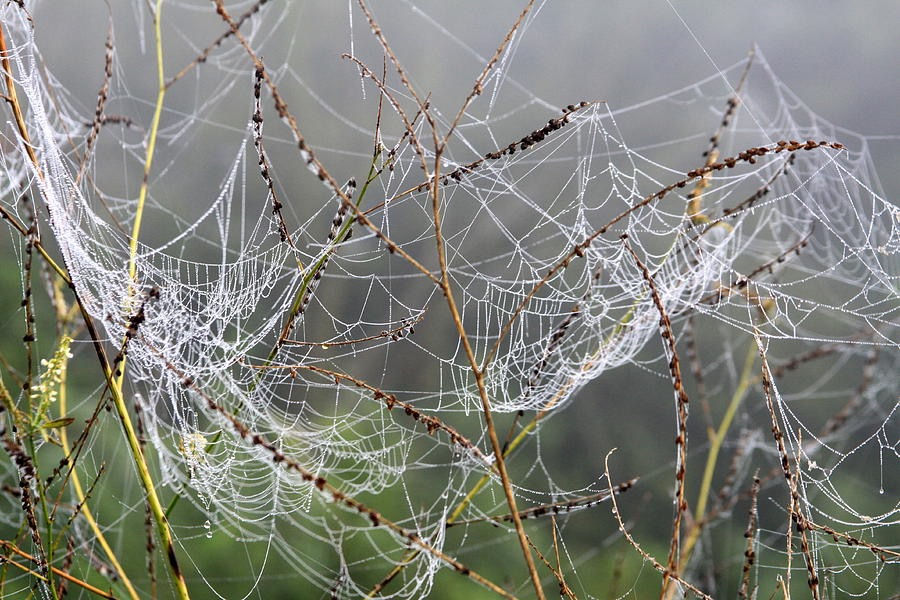
Either something is true, or it is a lie. Right? Not necessarily. Consider both these "false" statements:
The sky is red.
That outfit looks good on you.
The first would be considered a form of lie called gaslighting, where the liar's intent is to make their target doubt their own sanity. The second (assuming you think the outfit looks bad), would be considered a white lie, a lie out of kindness. (But is it kind to let your friend think something is flattering when they've directly asked for your opinion? It depends on whether or not they can change the outfit if they choose to take your advice.)

The veracity of things can exist on a spectrum. It's not always a dichotomy of true vs. false. That the sky is red is considered false; but it's also true, because sunlight is all colors, including red (and infra-red). We can only see the blue, though, so most people would consider "the sky is red" as either ludicrous or a malicious lie.
<navel gazing interlude>
As a linguistics nerd and daughter of two physicists, I have two perspectives—the common sense one and the literal one. ("I swear I don't love the drama nuanced; it loves me." 🎶 ). Unfortunately, this often causes decision paralysis in how to speak and. I can tell it frustrates people sometimes, especially those who are more literal and linear minded than myself—to my own frustration, I'm just not a native speaker of simple and straighforward. Fuzzy logic and metaphor are my jam.
</navel gazing>
Can You Be Too Honest?
On one end of the truth–lie spectrum is oversharing—letting others know so much that you make them uncomfortable. On the other end is creating a barbed wire fence of lies (sometimes even just lies of omission) to keep people from knowing anything about you and your life. So if there's no line, how do we make decisions about what to share and what not to? How do you respond kindly but honestly to complicated or personal questions?
Lying is of course not necessary. One can say "that's private." That doesn't always go over well; no matter how tactfully you try to phrase it, it's still a "no" that can be interpreted as a barrier to intimacy. Still, isn't it kinder to be honest and trust that your relationship is strong enough to allow for some boundaries? I think yes. I like my relationships to be as authentic as possible, but that is always a work in progress (especially in American culture. The Swedish have figured out its best to be direct. Call a toilet a toilet, so to speak.)

Privacy is a Human Right.
If I lied to you, reader, it's because I didn't have the wherewithal at that time to tell you the truth, or I need time to formulate an answer to a question I found too complex to answer on the spot. Understandable? Yes. Forgiveable? That is not for me to answer.
People often lie because
they don't have the mental energy to address something that complex on the spot
they are anxious at what the listener will think or feel
they expect that the listener will misinterpret and perhaps take offense, threatening the relationship.
One could of course be wrong about 3. But the possibility plagues me nonetheless. After all, "I'm fine" can mean its exact opposite in many contexts. This can have disastrous results.
<poetry interlude>
I can hear my beloved high school English teacher Ms. Pohl read this, and it hits different almost four decades later. I can still hear her voice:
"Write it!" in the following poem by Elizabeth Bishop, and it gives me goosebumps. I wish I could tell her I understand now.
(Joy, please google your name someday and find this page; and forgive my familiarity, but SEO demands key words.)
One Art
The art of losing isn’t hard to master;
So many things seem filled with the intent
To be lost that their loss is no disaster.
Lose something every day.
Accept the fluster
of lost door keys, the hour badly spent.
The art of losing isn’t hard to master.
Then practice losing farther, losing faster:
Places, and names, and where it was you meant
to travel. None of these will bring disaster.
I lost my mother’s watch.
And look! my last, or
next-to-last, of three loved houses went
The art of losing isn’t hard to master.
I lost two cities, lovely ones. And, vaster,
some realms I owned, two rivers, a continent.
I miss them, but it wasn’t a disaster.
—Even losing you (the joking voice, a gesture
I love) I shan’t have lied. It’s evident
the art of losing’s not too hard to master
though it may look like (Write it!) like disaster.
</poetry>
I present this Boomer-inspired joke:

Please reserve judgment on the sexism—I didn't write this meme (and I do plan to explain in a different post why I think women may be more likely to respond this way, and why it is actually rational—and sometimes life-saving).
"I'm fine" can mean any of the following:
I'm actually fine, but I don't want to say more about it because [reason], so here's a single word and then we can talk about something more interesting
I'm not fine, but I don't have the energy to explain all the ways in which I'm not fine
I'm not fine, but I am not confident you would understand because you are [different from me in x way], and I do not want to risk a misinterpretation
I don't want to burden you, or take on the burden of not only living a nightmare but having to recount it.
Something else
For me, I think I just don't like talking about myself and my physical/mental status very much. I'd rather say "fine" and get on with talking about slime mold, the meaning of life, or Taylor Swift's lyrical genius. I have to get to live with myself all the time, so I'd much rather talk about another topic. Like whether or not you are fine. (If the answer to that question is noneya, as in none of ya business, that is also fine. In fact, I like to be trusted to take no for an answer.)

Is Deflection a Lie?
Sort of, but also sort of not. They're an attempt by an imperfect communication system to say "I don't want to answer that." I understand though, that for the listener, it can be confusing or distressing to hear the next day that the person is not fine; in fact they have cancer. But no one has an inherent right to know just because they asked. "How are you?" can be a highly loaded question in certain contexts. "Hanging in there" might be a good compromise answer, but it can also invite further scrutiny, so I'm going to stick with "fine," for now.
Honesty and Intimacy
I like authenticity. I would much rather be told if something is private, than to have a person answer honestly only out of conversational pressure. Being invited into someone's confidence is a big deal. I also want to remind myself that I want to guard my own privacy with seven fences, each one more difficult to unlock than the last. I want to unlearn oversharing, both for my own sake and for others'. No one can un-know something, after all. Being an open book usually means having a cracked spine.
Good fences do make good neighbors. Being able to say "that's private," to someone and have that be ok, is a strong foundation for the development of intimacy.

I think that whether something is truth or lie may be like Schroedinger's cat—it can be both at the same time. Only close examination will tell you the truth.
§


I love *First woman in space* and Cat’s Schrödinger. And I know the art of losing isn’t hard to master. But I just found an electric screwdriver I thought some contractors had taken several years ago. 🙂